
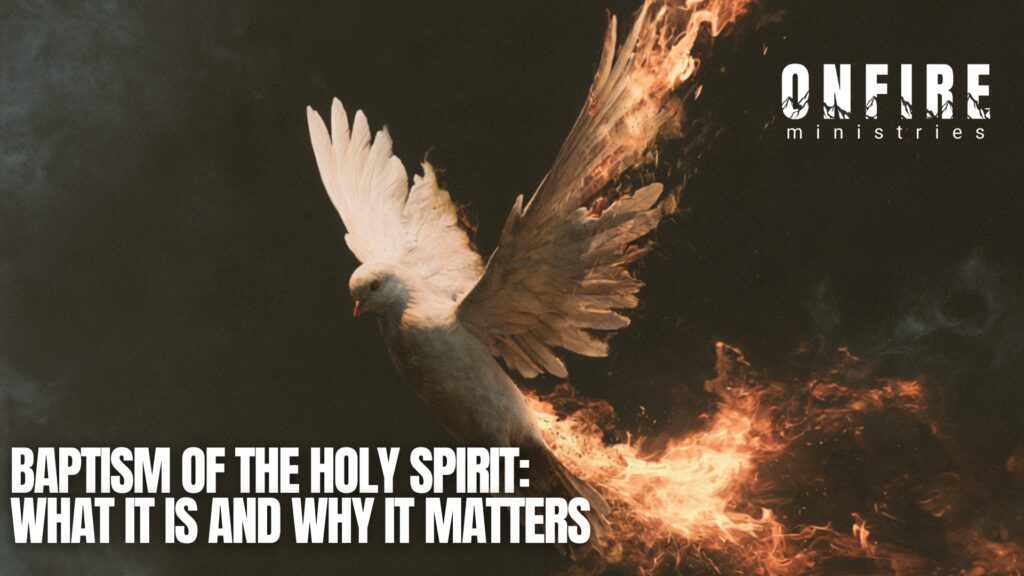
Understanding the Biblical Foundation

The baptism of the Holy Spirit is a biblical promise. Jesus Himself declared to His disciples, “for John baptized with water, but you will be baptized with the Holy Spirit not many days from now ” (Acts 1:5).
When we examine Acts 2:1-4, we witness the fulfillment of Jesus’ promise: When the day of Pentecost had come, they were all together in one place. And suddenly a noise like a violent rushing wind came from heaven, and it filled the whole house where they were sitting. And tongues that looked like fire appeared to them, distributing themselves, and a tongue rested on each one of them. And they were all filled with the Holy Spirit and began to speak with different tongues, as the Spirit was giving them the ability to speak out. “
This dramatic event forever changed the trajectory of the church. What was once a group of fearful believers became a bold, world-changing movement empowered by God’s Spirit.
What the Baptism of the Holy Spirit Is
The baptism of the Holy Spirit is an immersion in God’s power; a distinct experience where believers receive supernatural empowerment for witness and service. Jesus explicitly connected this baptism with receiving power: ” but you will receive power when the Holy Spirit has come upon you; and you shall be My witnesses both in Jerusalem and in all Judea, and Samaria, and as far as the remotest part of the earth” (Acts 1:8).
This isn’t just an emotional experience, although emotions may be involved. Rather, it is a tangible impartation of divine enablement that equips believers to:
- Witness effectively: The primary purpose is evangelistic power
- Operate in spiritual gifts: As detailed in 1 Corinthians 12:7-11
- Experience deeper communion with God: Romans 8:26-27 reveals how the Spirit aids our prayer life
- Live sanctified lives: The Holy Spirit ensures victory over sin (Romans 8:13)
Throughout Acts, we see this pattern repeated, believers receiving the Holy Spirit accompanied by supernatural manifestations that authenticated their experience.
Evidence of the Baptism
The consistent evidence of Spirit baptism in Scripture involved speaking in tongues (Acts 2, Acts 10:44-46, Acts 19:1-6). In Acts 10, Peter recognized that Cornelius and his household had received the Holy Spirit specifically “because they heard them speaking in tongues and praising God” (Acts 10:46).
Speaking in Tongues is the divinely inspired ability to speak in languages previously unknown to the speaker so God’s message can edify the body.

Interpretation is understanding what a speaker is saying even though the language being spoken is not known, and communicating the message to everyone else so all can understand and be edified.
The Four Expressions of Tongues
1. Earthly Foreign Language (Acts 2:6)
On the Day of Pentecost, believers spoke in actual human languages they had never learned, enabling people from various nations to hear God’s message in their native tongues.
2. Intercession (Romans 8:26)
“In the same way the Spirit also helps our weakness; for we do not know how to pray as we should, but the Spirit Himself intercedes for us with groanings too deep for words.” This Spirit-to-Spirit interaction bypasses the limitations of our soul, allowing God to pray through us according to His perfect will.
3. Prophesy in Heavenly Language
This public expression must follow specific guidelines:
- Must be orderly – done decently and in proper sequence
- Must be interpreted – “Therefore let one who speaks in a tongue pray that he may interpret” (1 Corinthians 14:13)
- Must be judged by the elders – for authenticity and application
When interpreted, it edifies the entire church. Paul distinguishes between prayer (proseuchomai: interaction with God) and speaking (laleo: communication to others).
4. Personal Prayer Language & Singing
“For one who speaks in a tongue does not speak to men but to God; for no one understands, but in his spirit he speaks mysteries” (1 Corinthians 14:2).
Personal Benefits:
- “One who speaks in a tongue edifies himself” (1 Corinthians 14:4)
- “I will pray with the spirit and I will pray with the mind also; I will sing with the spirit and I will sing with the mind also” (1 Corinthians 14:15)
The Intimacy of Divine Language: Scripture hints at deeper dimensions of this gift:
- The original language Adam spoke (Genesis 2:19-20)
- The tongues of angels (1 Corinthians 13:1)
- A name only Christ knows (Revelation 19:12)
- A personal name for each overcomer (Revelation 2:17): “I will give him a white stone, and a new name written on the stone which no one knows but he who receives it”
The white stone (psephon) was a voting stone symbolizing governmental authority. The new name (onoma) represents our character and identity in Christ. My God has a language just for me. A name just for me. Just as a husband has special names and ways of speaking to his bride, so does our Lord with His people, demonstrating how special we are to Him.
Distinct from Salvation
It’s critical to understand that while all believers have the Holy Spirit’s presence from the moment of salvation (Romans 8:9), the baptism of the Holy Spirit is a distinct empowerment. The disciples were already believers when Jesus breathed on them in John 20:22, saying, “Receive the Holy Spirit.” Yet He still instructed them to wait for the baptism of the Holy Spirit in Acts 1:4-5. And to be empowered from on high.
In Acts 8:14-17, we see Samaritan believers who had been baptized in water but had not yet received the Holy Spirit: “Now when the apostles in Jerusalem heard that Samaria had received the word of God, they sent them Peter and John, who came down and prayed for them that they would receive the Holy Spirit. (For He had not yet fallen upon any of them; they had simply been baptized in the name of the Lord Jesus.) Then they began laying their hands on them, and they were receiving the Holy Spirit. ”
This passage clearly demonstrates the distinction between initial salvation, water baptism, and the subsequent baptism in the Holy Spirit.
The Holy Fire and Wind
Matthew 3:11 and Luke 3:16 tell us, “I baptize you with water for repentance. But after me comes one who is more powerful than I, whose sandals I am not worthy to carry. He will baptize you with the Holy Spirit [Pneuma] and fire [pyri].”
The Holy Spirit (Pneuma) represents the Holy Wind or Holy Breath of God, while the fire (Pyro) signifies active flame. When we look at the original language, we gain deeper insight into what happened at Pentecost when the disciples were “all filled with the Holy Spirit and began to speak with other tongues [glossais], as the Spirit was giving them utterance” (Acts 2:4).
The Holy Fire serves multiple purposes in our spiritual lives:
- Fire renews through burning away, just as controlled burns renew crops
- Fire doesn’t burn you out; it propels you forward like fuel for a car or rocket, though your vessel must be strengthened in the Lord to contain it
- Fire leads the way like a flashlight, reminiscent of how God led Israel with “a pillar of cloud by day and a pillar of fire by night” (Exodus 13:21)
- Fire doesn’t consume believers; it makes them brighter, like the burning bush that Moses witnessed; transforming all it touches into light
- Fire doesn’t destroy; it cleanses and sanctifies, as we see when “fire falls on the sacrifice” (1 Kings 18:38)
Jesus Himself declared in Luke 12:49-50, “I have come to cast fire upon the earth; and how I wish it were already kindled! But I have a baptism to undergo, and how distressed I am until it is accomplished!”
Holy Spirit Baptism in the Old Testament
While the full expression of the Holy Spirit’s baptism came at Pentecost, we see foreshadowing of this gift in the Old Testament. In Numbers 11:16-30, Moses gathered seventy elders to help govern Israel, and God declared, “I will take of the Spirit who is upon you, and will put Him upon them.”
The result? “When the Spirit [Ruach] rested upon them, they prophesied.” This showed God’s desire to empower His people for ministry and leadership. When two men named Eldad and Medad began prophesying in the camp, Joshua became concerned. Moses’ response reveals God’s heart: “Are you jealous for my sake? Would that all the LORD’S people were prophets, that the LORD would put His Spirit upon them!” This was fulfilled in the book of Acts.
We also see powerful examples when “the Spirit of the LORD came upon [labesha] Gideon; and he blew a trumpet, and the Abiezrites were called together to follow him” (Judges 6:34). The Hebrew word “labesha” indicates being clothed or possessed by the Spirit, followed by immediate action. This demonstrates that the Spirit’s empowerment always leads to kingdom advancement.
Why the Baptism of the Holy Spirit Matters Today
In a world desperate for authentic spiritual power, the baptism of the Holy Spirit isn’t a theological relic but a present necessity. Here’s why it matters now more than ever:
1. Divine Empowerment for Effective Witness
Jesus didn’t command world evangelization without providing the necessary power. The task of reaching our communities and nations requires supernatural empowerment. Human eloquence, marketing strategies, and technological innovation cannot replace the Spirit’s power in convincing hearts.
As Peter stood on Pentecost, it wasn’t his natural abilities but the anointing of the Spirit that brought 3,000 to faith in a single day (Acts 2:41). That same power is available to every believer today who hungers for effectiveness in ministry.
2. Access to Supernatural Gifts
The baptism of the Holy Spirit opens the door to the nine supernatural gifts described in 1 Corinthians 12:7-10: “Now to each one the manifestation of the Spirit is given for the common good. To one there is given through the Spirit a message of wisdom, to another a message of knowledge by means of the same Spirit, to another faith by the same Spirit, to another gifts of healing by that one Spirit, to another miraculous powers, to another prophecy, to another distinguishing between spirits, to another speaking in different kinds of tongues, and to still another the interpretation of tongues.”
These gifts are practical tools for ministry, healing, guidance, and building up the church. A church operating in the fullness of these gifts becomes a demonstration of God’s kingdom, not merely an intellectual discussion about it.
3. Deeper Intimacy with God
The Holy Spirit enhances our communion with God, especially through prayer. Romans 8:26 tells us, “Now in the same way the Spirit also helps our weakness; for we do not know what to pray for as we should, but the Spirit Himself intercedes for us with groanings too deep for words”
This supernatural prayer dimension allows believers to pray beyond their natural understanding, building themselves up in faith (Jude 1:20) and maintaining spiritual vitality.
4. Boldness in Adversity
After receiving the Holy Spirit, the once-fearful disciples became courageous witnesses. Acts 4:31 demonstrates how the Spirit’s filling produces boldness: “After they prayed, the place where they were meeting was shaken. And they were all filled with the Holy Spirit and spoke the word of God boldly.”
In today’s increasingly hostile spiritual environment, believers need this same supernatural boldness to stand firm in their faith and testimony.
Activating the Gifts to Their Fullest Measure
The gifts of the Spirit require activation to reach their fullest potential. There’s always action required on our part; receiving, accepting, speaking, and carrying the light burden of Jesus. There’s no sense of entitlement, only responsibility. As believers, we are not entitled; we are Titled. With the title of Son or Daughter of God comes authority, power, and responsibility.
Remember, the Holy Spirit filled both the room AND the disciples at Pentecost. Just as Jesus taught that the Kingdom is both “in our midst” and “inside us” (Luke 17:21), the seven Spirits of God equip us for every aspect of our ministry and humanity.
1. The Spirit of the Lord
This represents the anointing and presence of God Himself — the Spirit of authority, dominion, and relationship.
- Brings power to rule, lead, and operate in the authority of Christ.
- Enables believers to walk in the supernatural and carry God’s presence.
“Not by might, nor by power, but by my Spirit, saith the Lord of hosts.” — Zechariah 4:6
2. The Spirit of Wisdom
The ability to see through God’s eyes and make righteous decisions.
- Guides us in divine strategy and creativity.
- Produces clarity in complex situations.
“If any of you lack wisdom, let him ask of God…” — James 1:5
3. The Spirit of Understanding
The Spirit that gives insight and discernment into God’s Word and will.
- Helps interpret revelation and apply it correctly.
- Deepens intimacy with the mind of Christ.
“Then opened he their understanding, that they might understand the scriptures.” — Luke
24:45
4. The Spirit of Counsel
The Spirit that provides divine guidance and direction.
- Gives heavenly advice in moments of uncertainty.
- Empowers believers to lead others wisely.
“Your ears shall hear a word behind you, saying, ‘This is the way, walk in it.’” — Isaiah 30:21
5. The Spirit of Might
The Spirit of supernatural strength and boldness.
- Enables perseverance, miracles, and victory in warfare.
- Breaks through opposition and empowers faith action.
“Be strong in the Lord, and in the power of his might.” — Ephesians 6:10
6. The Spirit of Knowledge
The Spirit of divine awareness and truth.
- Brings understanding of God’s purposes and the reality of His Kingdom.
- Guards against deception and ignorance.
“My people are destroyed for lack of knowledge.” — Hosea 4:6
7. The Spirit of the Fear of the Lord
The Spirit of reverence, holiness, and awe before God.
- Keeps believers humble, pure, and obedient.
- Produces wisdom and protects from pride.
“The fear of the Lord is the beginning of wisdom.” — Proverbs 9:10
A Solemn Admonition
The Apostle Paul gives this sobering warning in 1 Thessalonians 5:19-20: “Do not quench [sbenummi] the Spirit. Do not despise prophetic utterances.” The International Standard Version translates this as “Do not put out the Spirit’s ire.”
To “quench” means to extinguish as in a fire, to thwart or suppress. We must ask ourselves
challenging questions:
- Are you thinking “God couldn’t possibly do that” when confronted with the Spirit’s manifestations? (Remember, we discern by fruits)
- Just because counterfeits exist doesn’t mean the authentic isn’t real
- Are you preventing the Holy Spirit from renewing you, propelling you forward, leading you, cleansing you, or making you brighter?
- Are you stomping on the Holy Spirit’s gift or ministry in someone else?
How to Receive the Baptism of the Holy Spirit
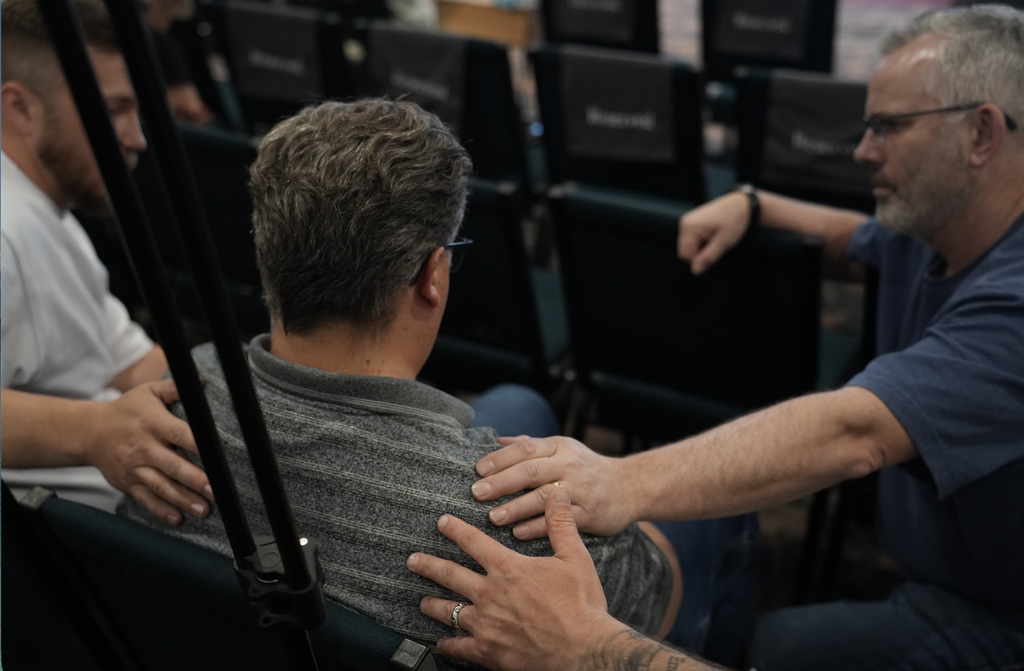
The baptism of the Holy Spirit is a distinct experience separate from salvation. In Acts 19:1- 7, Paul encountered disciples who had already placed their faith in Jesus and been water baptized, yet had not received the Holy Spirit. When Paul asked, “Did you receive the Holy Spirit when you believed?” He was indicating this is an experience believers should actively seek. This baptism builds upon the foundation of faith in Jesus Christ and empowers us for ministry, leading to healing, deliverance, and evangelism. Through this baptism, we find unity in the body of Christ (1 Corinthians 12:13).
The Biblical Pattern from Acts 19:1-7
When Paul ministered to the Ephesian believers, we see a clear pattern:
- They were already believers – saved and had faith in Jesus
- They had been water baptized – fulfilling the command to be baptized in water
- Recognition of need – Paul asked about receiving the Holy Spirit, establishing this as a distinct experience
- Laying on of hands – “When Paul had laid his hands upon them, the Holy Spirit came on them”
- The Spirit came upon them – they received/were baptized in the Spirit
- Clear evidence followed – they began speaking in tongues and prophesying
If you desire this biblical experience, here are practical steps:
Ensure your salvation foundation – This experience is for believers. Make certain your relationship with Jesus is established before seeking this empowerment.
Cultivate spiritual hunger – Jesus said, “Blessed are those who hunger and thirst for righteousness, for they will be filled” (Matthew 5:6). We have been given access through grace to the fullness of God. The measure of grace changes with each season and grows through our intimacy with Him.
Ask in faith – “If you then, though you are evil, know how to give good gifts to your children, how much more will your Father in heaven give the Holy Spirit to those who ask him!” (Luke 11:13). God gives us what we need for the function He has called us to. All gifts are accessible to everyone through the same Spirit.
Receive through faith – The Holy Spirit is received by faith, not by emotional intensity or human effort. This isn’t about working up emotion—it’s about receiving God’s gift by faith.
Be willing to speak – As the disciples did on Pentecost, open your mouth in faith, allowing the Spirit to provide the utterance. Speaking in tongues is the divinely inspired ability to speak in languages previously unknown to the speaker. This includes prayer language; an intimate communication between you and God where “in his spirit he speaks mysteries” (1 Corinthians 14:2). Praying in the Spirit builds us up and creates unity in the body of Christ.
Many believers receive through the laying on of hands, following the pattern seen in Acts 8:17 and Acts 19:6, though this isn’t the only method. God often pours out His Spirit during worship, prayer, or even in private devotional times.
Conclusion
The baptism of the Holy Spirit is the divinely appointed means by which ordinary believers become extraordinary witnesses. As Jesus prepared to ascend, His instruction to wait for the Spirit’s empowerment (Acts 1:4-5) remains His command to us today.
In a world searching for authentic power and genuine spirituality, Spirit-baptized believers offer living proof of God’s continuing work. No program, strategy, or technological innovation can replace what only the Spirit provides.
Believers are encouraged: don’t settle for less than God’s full provision. Seek this biblical experience with sincere faith, receive it with humble gratitude, and live in its power with holy boldness. The same Spirit who transformed the early church stands ready to empower believers today.
If you have questions about receiving the baptism of the Holy Spirit or would like prayer ministry, connecting with a local church’s pastoral team can provide guidance and support. Seeking spiritual mentorship is valuable for experiencing the fullness of God’s provision for your life.